
Pet Travel Guides
Travelling With a Cat Versus a Dog Between Britain and Ireland
By Lorna Mullins, Founder of Fetch Travels
Published 20 September 2026
Last fact-checked 20 September 2026
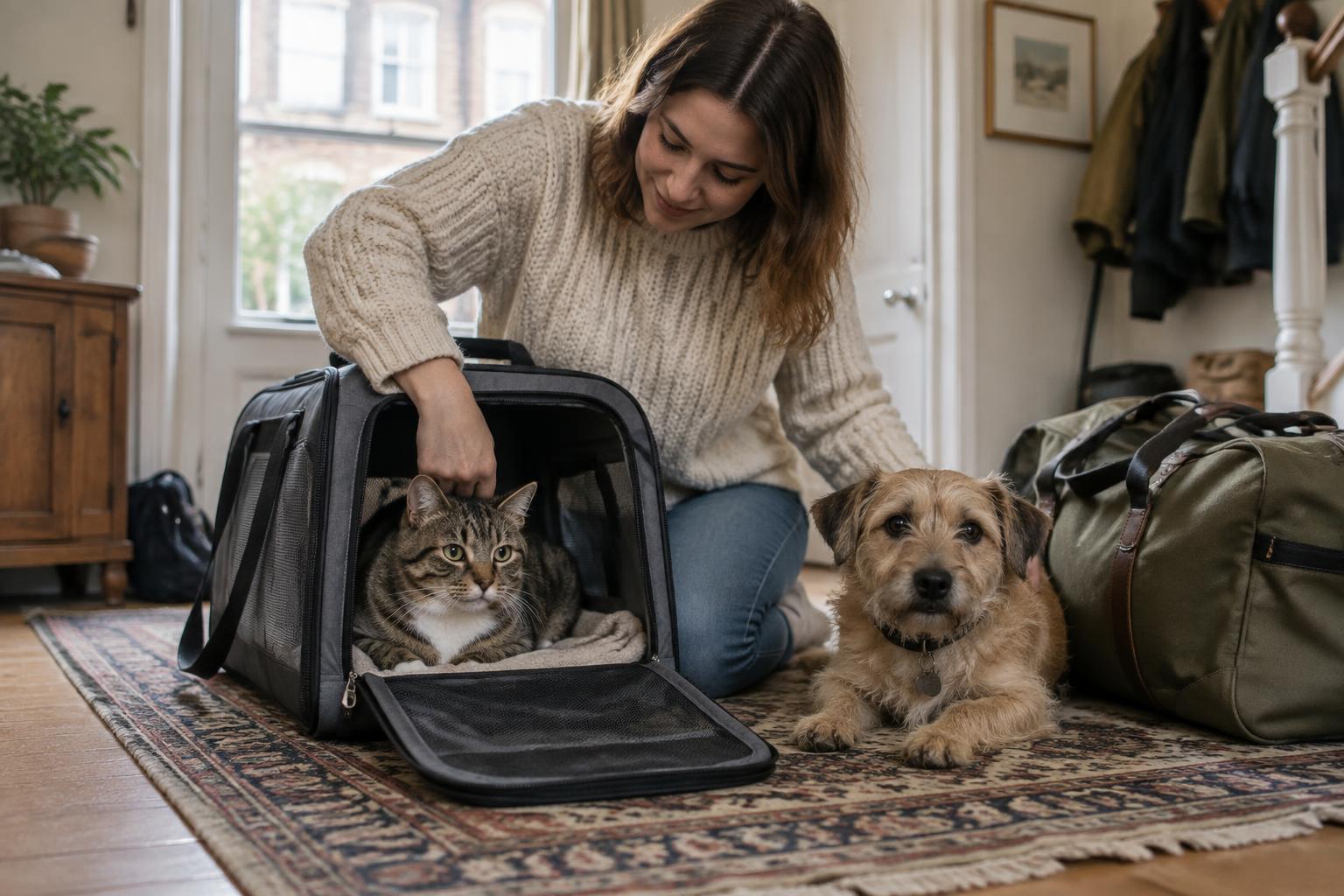
Cats and dogs may need much of the same official paperwork, but they rarely experience the journey the same way. A dog may be delighted by a station full of smells and people. A cat may regard the same station as an entirely unnecessary crisis. I work with both, day in day out, and I'd plan these journeys quite differently even when the route and documents look identical on paper.
What stays the same
For travel from Great Britain to the Republic of Ireland, both cats and dogs normally need a compliant microchip, a current rabies vaccination and an Animal Health Certificate issued by an Official Veterinarian. Someone whose main home is in Great Britain should use an Animal Health Certificate rather than relying on an EU pet passport to enter Ireland.
The most important paperwork difference
Dogs entering Ireland from Great Britain need veterinary tapeworm treatment between 24 and 120 hours before scheduled arrival. Cats do not. A dog's veterinary timeline therefore needs to be tied to the ferry's arrival time, with disruption considered.
On the train
A dog can travel on a lead or in a carrier under National Rail's general policy. A cat must be kept in a rigid, closed carrier that prevents escape and is large enough to stand and lie down comfortably.
For a cat, test the carrier before travel. It should be secure, ventilated, labelled and manageable to lift. An absorbent liner with a spare nearby is more useful than an elaborate, cramped setup.
On the ferry
Both cats and dogs must be declared when the ferry is booked. Depending on the vessel, they may need a pre-booked kennel, designated Pet Den or lounge, pet-friendly cabin, or vehicle arrangement.
For cats, confirm that the facility accepts cats and whether they remain in their own carrier. For dogs, ask about relief areas, kennel visits and any muzzle rule.
The welfare plan should be individual
- Practise short carrier journeys before an all-day trip.
- Choose quieter travel times and avoid unnecessary changes.
- Give dogs a suitable walk and toilet opportunity before check-in.
- Keep food familiar and discuss sickness, anxiety or medication with your vet.
- Never give a sedative or human medication without veterinary advice.
- Check that microchip registration contact details are current.
Keep reading
Related pet travel guides
Decided your pet might be happier at home?
Not every journey is right for every pet. Fetch Travels can care for your dog or cat in the comfort of their own home, with familiar routines and regular updates while you're away.
Sources
Check the current guidance
- GOV.UK, Taking your pet dog, cat or ferret abroad
- Ireland Department of Agriculture, Pet Travel
- National Rail, Train travel with pets
- Irish Ferries, Pet Travel FAQ
- Stena Line, Travelling with pets on the Irish Sea
This guide is provided for general information and reflects rules and prices we understood to be accurate on the “last fact-checked” date shown above. Pet-travel rules, ferry and transport-provider policies, and veterinary costs can all change, and some, including Irish public transport’s pet policy, are under active review as we publish this. Always confirm current requirements with the official sources linked in this article, and with your vet, before booking or travelling. Fetch Travels provides in-home pet sitting in London; we do not currently offer pet-travel planning, veterinary coordination, or relocation services.